Nice Constitution You've Got. Be a Shame if We Stirred That Old Kettle Again
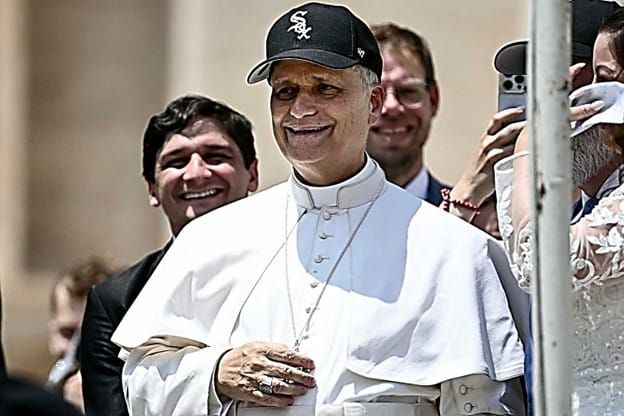
A year ago, I was sitting in Spanish class at the senior center, trying to remember the difference between ser and estar, when my phone buzzed with the news that the conclave had elected a new pope. The room reacted in the gentle, unhurried way that rooms like that do: a few nods, a few raised eyebrows, and one man who announced, with the satisfaction of someone finally getting to use a line he'd been saving, "Well, that's a whole new kettle of fish."
It was a small moment — the kind that passes without leaving a dent. But this past Sunday, when President Trump made remarks about Pope Leo, that old kettle felt less like a joke and more like a reminder. The pot wasn't simmering anymore. It was rolling.
The Constitution hasn't changed in the past year. But the atmosphere around it has. The president's comments didn't violate the First Amendment or redraw any legal boundaries. The constitutional stakes lie elsewhere — in how presidential speech interacts with the norms that protect religious freedom. The Constitution bars the government from favoring or disfavoring a faith. While a president's words don't change the law, they can shift public sentiment about who is presumed to belong, who is trusted, and who is viewed with suspicion. The danger lies not in statutes, but in the atmosphere.
And this particular atmosphere is familiar.
The suspicion that Catholics harbor a divided loyalty is one of America's oldest political reflexes. It shaped colonial laws, fueled 19th‑century riots, and built entire movements. It's the reason John F. Kennedy stood in a Houston ballroom in 1960 and assured the nation he wouldn't be taking policy instructions from Rome — a speech that, in retrospect, reveals more about American nerves than about Kennedy himself.
Before Kennedy, there was Al Smith in 1928, the first Catholic nominated by a major party. His campaign was met with warnings that the Holland Tunnel was being dug so the pope could move into the White House. Smith lost in a landslide. Not because of tunnels, of course, but because old fears have a way of sounding newly plausible when repeated with enough confidence.
We like to believe we've moved past all that — that we've grown out of the idea that a religious leader thousands of miles away could somehow infiltrate American politics like a subplot in a paperback thriller. But Sunday's reaction showed how quickly dormant stories can warm back up, how easily they slip into the bloodstream of public conversation, and how fast they start to bubble.
The Constitution is sturdy, but it isn't self‑maintaining. It relies on civic steadiness — the discipline to separate personal suspicion from public principle. The Establishment Clause and the Free Exercise Clause don't enforce themselves; they depend on leaders who avoid signaling that certain faiths are suspect. When old fears get pulled off the shelf, they don't just sit there. They drift into headlines, into casual conversations, into the quiet assumptions people make about who belongs and who doesn't. That's how constitutional protections erode: not through dramatic breaches, but through a slow shift in the temperature of public life.
History makes the pattern plain. The convent burnings of the 1830s didn't erupt out of nowhere; they grew from a slow drip of rumor that eventually felt like truth. The Know‑Nothings didn't invent their anxieties; they reheated what was already simmering. The Blaine Amendments — still embedded in state constitutions — weren't crafted out of constitutional purity. They were the legislative version of checking under the bed for papal influence.
These episodes weren't driven by principle. They were driven by mood — anxious, ambient, and familiar.
And they tend to surface first in ordinary places. A senior‑center classroom. A passing joke. A moment when everyone laughs, but no one quite names what's underneath. Humor is often the first sign that something old is stirring. It lets off just enough steam to keep the pot from rattling — until it doesn't.
Over the past year, I've thought about that Spanish‑class moment more than I expected to. Not because it was dramatic, but because it was ordinary. Ordinary is where these things live. Ordinary is where they settle. Ordinary is where they become part of the air.
And here we are again, watching the bubbles rise.
The Constitution has always depended on the temperament of the people interpreting it. James Madison didn't design a system that could withstand every gust of public passion; he designed one that assumed we'd occasionally remember our better judgment. When old fears about religious loyalty get revived — even lightly, even as an aside — they don't just stir the pot. They turn up the flame under questions we should have resolved long ago.
A year ago, the news of a new pope arrived as a small disruption in a quiet classroom. This Sunday, it landed differently. Not as a curiosity, but as a reminder of how quickly history can reassert itself — and how easily old anxieties can slip back into our constitutional debates when someone gives the kettle a stir.
The pot isn't simmering anymore. It's boiling. And if history has taught us anything, it's that the boil is never the danger — it's the moment when we start mistaking the steam for clarity.