Part II: Day of Protest: A Year Further Into the Weather

A year has passed since that misty morning in Newtown, and the No Kings protests have not only endured—they have surged. What began as a handful of gatherings has become a nationwide insistence, a rising chorus of people who refuse to look away as excesses mount, as truth is bent, as freedoms narrow in ways that previously felt unthinkable. Every week, in cities and small towns, more voices join in. The crowds are larger now, more certain of what is at stake.
I didn’t know then that it would become a kind of anniversary for me, a private marker of who I was and who I was becoming. Today is sunny and chilly in my part of Pennsylvania. It is late March, almost a year since the first protest and it is one of the truly first beautiful days of spring. I pulled the same denim jacket from the closet. The Nikes are even more worn, the soles thinning in ways that mirror my patience, but they still carry me. I didn’t join the march today—my body has its own opinions this time—but I drove past the gathering on my way to the pharmacy. I slowed the car, rolled down the window, honked as if my way of life depended on it, and let the sound of the protest on the Newtown Bypass surround me.
The crowd is larger. Not louder, exactly—just more certain. I am sure the Quaker seniors are there again, their signs as plainspoken as scripture. I can see more young women with children, signs covered in stickers, and determination. I spot a teenager with rainbow hair standing beside a veteran in a faded cap. They don’t look like a movement. They look like a town. My town. The town George Washington passed through on his way to cross the Delaware is five miles down the road from my home.
I think about the guardrails I’d worried about a year ago—the ones that appeared wobbly, the ones I hoped would steady themselves. Some are holding. Others have splintered. Last summer, I watched as workers removed a bent, rusted barrier along the stretch near a park, replacing it with a bright new rail. At first, it looked solid, but over the months, someone had dented it, presumably with their car. It crumbled and has not been replaced.
A few metaphorical guardrails in our community have felt just as precarious, taking on the appearance of stability while actually allowing some through and keeping others out, much like the velvet rope at an exclusive club. I’ve learned that erosion is not always dramatic. Sometimes it’s a quiet subtraction, a small right removed here, a norm bent there, until one morning you realize the landscape has altered and you are not in Kansas anymore. Or St. Paul, or New York. Or Newtown. But I have also learned that what is worn away can often be rebuilt. Guardrails do not restore themselves—they require hands, eyes, voices, and steady attention from those who notice the changes. Collective watchfulness has the power to repair what has been lost and protect what still stands.
I’ve also confirmed something else: people, large groups of people, no matter their political affiliations, do not like to be fooled or lied to or forced into situations they can’t support. People rise. People refuse to be quieted.
The No Kings protests have grown into something practically ritualistic, becoming weekly events expected and integrated into the civic calendar alongside farmers' markets and high school football games. At their core, these protests are about demanding government accountability, defending voting rights, and pushing back against creeping authoritarianism. Protesters gather to insist that power remains with the people and that principles like fairness, transparency, and equal protection are not negotiable. They are not perfect. They are not unified. But they are persistent, and persistence is its own kind of power. Ask Thomas Paine. Or John Adams. Or Benjamin Franklin.
I’ve become a different kind of protester. I’m not 19, 39, or even 59. I write more letters. Following the example of my cousins Elizabeth and Mary, I call more congressional offices. I talk to neighbors who never used to bring up politics at all. Over time, I have realized that protest is not only about visible acts of defiance—it can also be expressed through sustained, quieter forms of engagement. There is a certain humility in understanding that my role has shifted: I no longer equate activism with physical presence alone, but recognize the significance of ongoing conversations and advocacy behind the scenes. Protesting, I have learned, can mean standing in the rain or snow, but it can also mean refusing to let a conversation slide into resignation. It can mean telling the truth gently but firmly. It can mean reminding someone that cynicism is not wisdom, just a quieter form of surrender. In taking this approach, I have grown more conscious of the subtle ways in which persistence shapes both personal integrity and collective resolve.
Over Christmas last December, one of my younger relatives jovially called me “woke.” At first, I bristled. I hate the phrase because it's been co-opted by people who don’t really know what it means. I started to answer that I was just tired, the way a person gets tired after a lifetime of believing in a country that sometimes forgets to believe in itself. But then I realized, I am also awake. More awake than I was at nineteen with my press badge at Nixon’s inauguration. More awake than I was last April in the drizzle.
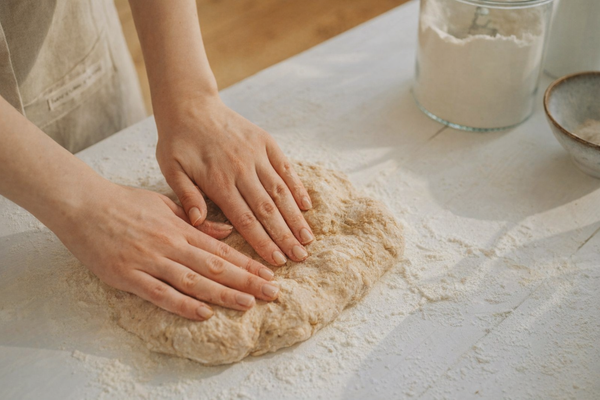
Awake enough to know that freedom is still a breakfast food, but these days, it feels more like sourdough starter than cereal or scrambled eggs. It needs tending. Feeding. Sharing. It can go dormant if left unattended. It can be revived if cared for. Tending to freedom means more than just believing in it. It can mean showing up to vote, calling a neighbor to help them register, driving someone to the polls, or offering your time at the library to teach others about the rights we still hold. Sometimes it is as simple as listening carefully, speaking up when something feels wrong, or passing along stories that remind us of what we could lose if we grow complacent. These small deeds keep the starter alive, helping it grow strong enough to share.
I didn’t march this time. I didn’t chant. I didn’t hold a sign. But I kept the pan hot. I kept the starter alive. I kept faith with the idea that ordinary people, in ordinary towns, can still insist on something better.
Watch this space. I won’t always be writing about marching in the rain. Sometimes the revolution is quieter but no less profound.